
Beyond the Turkey: How Thanksgiving Can Inspire Your Estate Planning
What Estate Planning Really Means
Estate Planning isn’t just about accumulating assets. It’s about preserving:
Stories, wisdom, and memories
Values and principles
Family traditions and cultural heritage
Emotional inheritance
Financial and physical assets
In our work with families at Simpson Law Firm, we’ve seen time and again that while money matters, what people regret losing most are stories, relationships, and identity. An Estate Plan that omits those elements is incomplete.
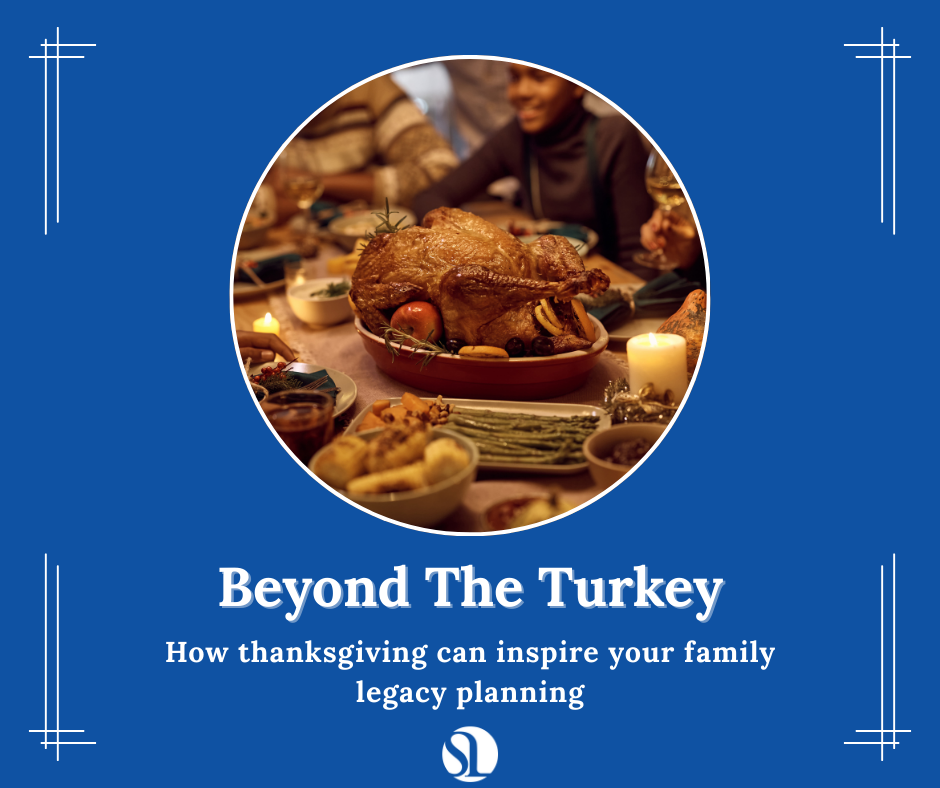
Thanksgiving offers the perfect time to reflect on these deeper pieces of legacy because of its themes of gratitude and togetherness.
How to Use the Holiday Gathering to Begin Legacy Conversations
Start with Gratitude and Values
Prompt: “During this season of thanks, I’d love to hear what family values you hold most dear.”
Alternate prompt: “Which quality in our family are you most grateful to inherit?”
These simple prompts invite thoughtful sharing without heavy pressure and help kick off family legacy conversations.
Introduce Family Philanthropy Gently
Prompt: “If our family had the opportunity to donate to a charitable cause, to what cause would you want to contribute and why?”
This opens up a natural segue into charitable giving, whether now or in Estate Planning.
Bring Up Your Plans with Sensitivity
You don’t have to announce it formally. Try:
“I’ve been thinking about creating an Estate Plan, one that captures not just financial assets but our values and stories. I’d be honored to talk with you when you’re comfortable about how we can preserve what matters most.”
These prompts help steer the conversation toward legacy work in a natural, non‑threatening way.
Capturing and Preserving Your Family’s Story
Document Recipes + Stories Together
Ask: “How did this recipe come into our family?”
Write down variants, flavor changes, who taught it, anecdotes. Ask for it in the original handwriting, if possible.
Conduct Family Interviews
After dinner or during downtime, ask younger members to interview older ones with prompts like:
“What was your childhood like?”
“What life lesson shaped who you are?”
“What do you most want your descendants to know?”
Record audio or video (with permission) or take notes.
This is an excellent way to gather stories you can incorporate into your Estate Planning strategies.
Display and Explain Family Artifacts
Pull out old letters, jewelry, photos, heirlooms.
Encourage storytelling: “Why is this meaningful? Who used it before us? What did they care about?”
Make Legacy Planning a Thanksgiving Tradition
Annual Family Time Capsule
Each year, invite family to contribute something meaningful (a letter, photo, small item)
Seal it, open after a fixed number of years
A ritual that builds continuity and anticipation.
Legacy Reflection Ritual
Ask: “What changed in our lives this year? What stories should we record?”
Collect reflections or ask someone to journal or share during dinner.
These moments can feed future family legacy conversations and deepen your family’s connection.
From Conversations to Action: Building Your Life & Legacy Plan
Conversations and stories are foundational, but without structure and legal instruments, they risk being lost or ignored. Here’s how Simpson Law Firm can help you move from conversation to action:
Translate into Legal Tools
Wills and Trusts
Advance Directives and Powers of Attorney
Guardianship Plans
Charitable giving provisions
Family Sharing Session
Once the legal framework is in place, hold a meeting (or special holiday moment) to share the core of the plan, what you hope it accomplishes, your values, and how the family can honor it.Periodic Review & Updates
Life changes. Revisit the plan and stories annually or when major milestones occur.
Over time, your plan evolves and strengthens through intentional Estate Planning strategies.
At Simpson Law Firm, we guide you through every step so your holiday conversations become a structured, lasting legacy for generations ahead.
Frequently Asked Questions (FAQ)
Q: Isn’t Estate Planning all about money?
A: Not at all. True legacy includes stories, values, and relationships, often holding more emotional weight than the financial assets.
Q: How do I bring this up without making things awkward?
A: Start with gratitude and storytelling. Lead with values and meaning rather than death. Let planning and family legacy conversations emerge organically.
Q: What if family members resist?
A: Respect their comfort level. You can begin with your part, share your reflections, and let others opt in over time.
Q: How long will this take?
A: Even small conversations (5–10 minutes) can yield meaningful insights. Legal and formal planning is a gradual, intentional process.
Q: Do I need a lawyer or advisor to help create my plan?
A: We strongly encourage you to consult with an Estate Planning Attorney in creating your plan. Legal documents, trusts, and enforceable directives require professional oversight to be valid and effective.
Q: When should I get started?
A: Now is ideal. Thanksgiving provides a meaningful kickoff. But legacy planning is best approached as a journey, not a deadline.
Conclusion
This Thanksgiving, let your gathering be more than turkey and pie. Let it be the beginning of a legacy: stories shared, values clarified, relationships honored. Those moments at your table can become the cornerstone of an Estate Plan that protects what matters most for generations to come.
Ready to turn conversations into concrete legacy?
This article is a service of Simpson Law Firm. We do not just draft documents; we ensure you make informed and empowered decisions about life and death for yourself and the people you love. We offer an Estate Planning session, during which you will get more financially organized than you’ve ever been before and we will assist you in making all the best choices for the people you love. You can begin by contacting us here, https://simpsonestatelaw.com/contact-us or calling us at 803-764-9555, and one of our friendly client service assistants will help you set up your consultation.
The content is sourced from Personal Family Lawyer® for use by Simpson Law Firm, a source believed to be providing accurate information. This material was created for educational and informational purposes only and is not intended as ERISA, tax, legal, or investment advice. If you are seeking legal advice specific to your needs, such advice services must be obtained on your own separate from this educational material.